First-Time Travelling to Morocco? Essential Tips You Actually Need
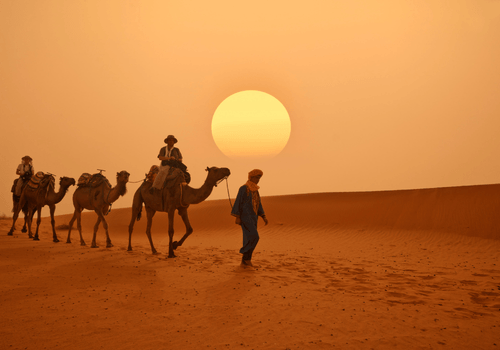
If travelling to Morocco is next on your list, you're in good company. It's one of the most talked-about destinations in Africa right now, and for good reason. But between the medinas, the mountains, the desert, and the dirham, a first Morocco trip can throw a lot at you at once. So let's slow down and walk through it together.
This is your friendly guide to travelling to Morocco for the first time. We'll cover when to go, what to pack, how money and transport actually work on the ground, and how to handle the souks without losing your mind (or your budget).
You’ll also discover what to expect the moment you land in Marrakech, Morocco's most-visited gateway city. Grab a cup of tea and let's get you ready.


What to Know When Traveling to Morocco
Morocco sits at a crossroads
Morocco isn't easy to sum up in one sentence, and that's part of the appeal. It sits where Arab, Amazigh (Berber), African, and European influences meet. It sits in the architecture, in the food, in the languages you'll hear layered over each other in a single conversation.
One afternoon you could be haggling in a covered souk, and by evening you're watching the sun drop behind the Atlas Mountains from a rooftop terrace. Few countries pack that much contrast into a single trip.
For first-time travelers, that range is exactly what makes planning feel a little daunting. Do you spend your whole trip in Marrakech? Add on the desert? Head north to Fes or west to the coast?
We'll help you think through that shortly. But first, it's worth understanding why timing and preparation matter more in Morocco than in a lot of other first-time destinations.
Why preparation actually changes your Morocco Trip
Morocco is warm, welcoming, and has been hosting travelers for centuries, literally, since caravan routes crossed the Sahara long before "tourism" was a word. It is genuinely one of the friendliest, safest countries you can visit as a first-timer.
But a few things- the heat, the medina's maze-like layout, the cash-based economy in smaller markets- catch newcomers off guard. Hence, a bit of preparation makes a real difference to how much you enjoy the trip, rather than just survive it.
That's what the rest of this guide is for.
A few ways first-timers commonly Plan a Morocco Trip
There's no single "right" itinerary, but most first Morocco trips fall into one of a few shapes:
Marrakech-only: For travelers with four or five days who want to go deep on one city rather than spread thin.
Marrakech plus the desert. Adding two or three days in the Sahara: This is a favourite combination for travelers who want both city energy and total stillness in one trip.
A multi-city loop, taking in Marrakech, Fes, and Chefchaouen or the coast: For travelers with a week or more who want to see how different the regions genuinely feel from one another.
Knowing roughly which plan you're aiming for before you start booking makes every other decision, such as the flights, transport, and how many nights per stop, significantly easier.
10 Morocco Travel Tips That Actually Matter
1. Time it right
The single biggest factor in how much you enjoy your trip is when you go. Spring (March to May) and autumn (September to November) are the sweet spots. They provide warm days, cool evenings, and manageable crowds.
Summer in inland cities and the desert can climb well past 40°C (104°F), which catches a lot of first-timers off guard if they've only checked the coastal forecast. Winter is mild and increasingly popular for budget-conscious travel, especially around Marrakech and Fes, though desert nights get genuinely cold, so don't leave the warm layers at home.
2. Sort your Morocco entry requirements early
Most travelers can enter Morocco visa-free for short tourist stays, but requirements vary by nationality, so check the specifics for your passport well before you book flights. For instance, Morocco is visa-free for American citizens for tourist and business stays of up to 90 days. Make sure your passport has enough validity remaining- a common last-minute scramble that's easy to avoid by checking now.
3. Get comfortable with Cash
Morocco runs on the dirham (MAD), and while cards are accepted in hotels, riads, and bigger restaurants, cash is king almost everywhere else. The souks, small cafés, petit taxis, tips, and other common centers. Withdraw dirhams from an ATM after you land (rates are generally better than exchanging cash beforehand) and carry small notes; vendors and taxi drivers frequently "don't have change" for large bills, which is its own small negotiation in itself.
4. Pack for modesty, not just weather
Morocco is a Muslim-majority country. While cities like Marrakech are used to international visitors, dressing with a degree of modesty, like having shoulders and knees covered, especially away from resort pools, goes a long way toward comfortable, respectful interactions for travellers of any gender.
Bring layers: days can be warm even when evenings and desert nights turn sharply cool. Comfortable, closed shoes are non-negotiable if you're walking medina cobblestones for hours, which you will be.
A quick packing checklist worth working from:
Loose, breathable clothing that covers shoulders and knees
A light scarf or shawl, useful for sun, wind, modesty at religious sites, and desert evenings all at once
Comfortable walking shoes with real grip for uneven cobblestones
A warm layer for desert nights and winter evenings, even if you're visiting in a warmer month
Sunscreen, sunglasses, and a reusable water bottle you can refill from filtered sources
A universal adapter. Morocco uses the European two-pin plug
5. Budget with a realistic picture in mind
Morocco can be genuinely affordable or comfortably mid-range depending on your choices, and it's worth budgeting for a few specific things first-timers often underestimate: guide and driver tips (small cash tips are expected and appreciated throughout your trip), entry fees for palaces and gardens, and the cost of arranged transport between cities if you're not using trains.
A simple street-food lunch might cost you the equivalent of a few dollars; a well-reviewed riad with a rooftop terrace can be surprisingly affordable outside peak season. Set a daily estimate before you go, then build in a little extra for the souk purchase you didn't plan on making.
6. Learn a few words of Arabic or French
You'll get by with English in tourist-facing spots, but Moroccan Arabic (Darija) and French are the everyday languages, especially outside the main cities. A handful of basics like shukran (thank you), salam (hello), and la shukran (no thank you, useful in souks) genuinely change how conversations go. Locals notice and appreciate the effort every time.
7. Understand how transport actually works in Morocco
Trains (ONCF) connect major cities like Marrakech, Casablanca, Fes, and Rabat comfortably and affordably, often the easiest way to move between them.
CTM and Supratours buses cover routes trains don't reach, including smaller towns and some desert gateway towns.
Petit taxis (small, usually beige or blue depending on the city) handle short in-city trips and insist on the meter, or agree on a fare before you get in.
Grand taxis run longer or shared routes between towns; agree on the price and destination clearly before departing.
Ride-hailing apps work in some cities but aren't universal, so don't rely on them as your only backup plan.
8. Learn to navigate and enjoy the Medina
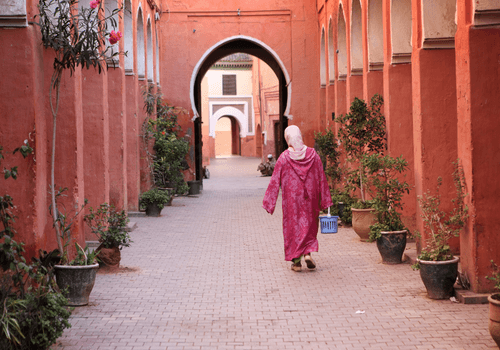
Every major Moroccan city has a medina, the old walled city, and Marrakech's is famously labyrinthine. Getting a little lost is part of the experience, not a sign you're doing it wrong, but a few habits help:
Don't follow unsolicited "guides," especially kids offering directions to "help". It’s usually the start of a commission-based detour, not a scam in the dramatic sense, just an unnecessary one.
Screenshot your riad's location and nearby landmarks before you head out, since phone signal inside old medina walls can be patchy.
Bargaining is expected in souks. It’s a normal, even enjoyable, part of shopping here, not an inconvenience. Start around half the asking price and meet somewhere in the middle, with good humour on both sides.
9. Say yes to the food, with a little caution
Moroccan food is one of the best reasons to visit on its own: tagines, fresh bread, olives, mint tea poured from a height as a mark of hospitality. Eat freely and try things you don't recognise. The general rule of thumb: stick to bottled or filtered water, and choose street food stalls that are clearly busy and turning food over quickly, which is usually a good sign of freshness.
10. Stay in a riad at least once
A riad is a traditional house built around an interior courtyard. It is one of the most memorable places you can sleep in Morocco, and staying in one, even for a couple of nights, adds a layer to your trip that a standard hotel room simply doesn't. Book ahead in peak season, and don't be surprised if the entrance is an unassuming door on a narrow medina alley; that's exactly how they're meant to look from outside.
Traveling to Marrakech: What First-Timers Should Know
If you're travelling to Marrakech as your first stop, and most first-timers are, a few things are worth knowing before you land:
Djemaa el-Fna, the main square, is genuinely worth the hype, especially at dusk when food stalls, musicians, and storytellers fill the space. Go more than once; it changes character completely between afternoon and night.
The souks fan out from the square in a genuine maze, organised loosely by craft. Leather in one section, metalwork in another. Give yourself hours, not a quick half-hour stop.
The Majorelle Garden and Bahia Palace are two of the most popular sites and get busy early; arriving right at opening avoids the worst of the crowds.
Airport transfers should be arranged or agreed in advance where possible; taxi pricing at the arrivals hall can be inconsistent for travelers arriving without a plan.
Marrakech gets genuinely hot for a large part of the year. Plan midday downtime into your schedule the way locals do, and save walking-heavy sightseeing for morning and late afternoon.
Bonus Tips When Traveling to Morocco
Download an offline maps app (Maps.me or Google Maps offline areas) before you go. Medina Wi-Fi and signal are unreliable, and a saved map is worth more than any guidebook in the moment you actually need it.
Carry a small paper copy of your riad's address and phone number in Arabic script, which you can show to taxi drivers or ask a shopkeeper to help you locate if you get turned around.
Book cultural experiences and guides through community-based operators rather than a generic booking platform. You’ll get context and connection a generic tour can't offer, and your money supports the people actually hosting you.
Check current entry requirements on your government's official travel advisory site closer to your travel date, since rules can shift.
Keep a digital and paper copy of your passport and travel insurance details separate from the originals. It is a small habit that saves real stress if anything goes missing during a busy Medina day.
Consider a local SIM card on arrival at the airport; both airports and city centers sell them cheaply, and reliable data makes navigation, translation, and staying in touch with your riad significantly easier than relying on patchy wifi alone.
Frequently asked questions
Is Morocco safe for first-time travellers?
Yes. Morocco is considered a safe, welcoming destination for first-time visitors, including solo travellers. As anywhere, stay aware in crowded tourist areas and agree on prices upfront to avoid unnecessary friction.
Do I need to speak French or Arabic to get by?
No, but a few basic phrases go a long way, especially outside major tourist areas. English is widely understood in Marrakech's tourist-facing businesses.
What's the best time to visit Morocco for a first trip?
Spring (March to May) and autumn (September to November) offer the most comfortable weather for sightseeing, walking medinas, and day trips into the mountains or desert.
How many days do I need for a first Morocco trip?
A week gives you enough time to properly enjoy Marrakech plus one add-on, whether that's the desert, the coast, or the Atlas Mountains, without feeling rushed between stops.
Can I drink the tap water in Morocco?
It's best to stick with bottled or filtered water throughout your trip, including for brushing your teeth in the first few days while your system adjusts. Most riads and hotels provide bottled water as standard.
What is a souk?
A souk is a traditional market, usually made up of narrow, covered lanes packed with stalls selling everything from spices and leather goods to lamps, textiles, and jewellery. Marrakech's souks fan out from the main square and are loosely organised by craft, so you'll pass through distinct sections as you wander deeper in.
Is bargaining really necessary in the souks?
It's expected rather than optional in most souk stalls. Prices are typically set high with the assumption that you'll negotiate. Approach it as a friendly back-and-forth rather than a confrontation, and you'll likely enjoy it more than you expect to.
Conclusion
Travelling to Morocco for the first time can feel like a lot to plan for. But almost everything that trips up first-time visitors comes down to a handful of things. These are timing your trip well, carrying cash, dressing with a little modesty, and permitting yourself to get a bit lost in the medina without panicking about it.
By following the Morocco travel tips highlighted in this post, you should enjoy your trip. Everything else is Morocco doing what it does best, pulling you into mint tea conversations, unforgettable food, and a rhythm of life that's worth slowing down for.
You don't need to have it all figured out before you land. You just need enough of a foundation to relax into the rest.
Ready to plan your Morocco trip?
Tell us what you're hoping to see and feel on this trip, and we'll help you build an itinerary that actually fits.

Download my free travel guide to navigating Accra- Ghana from hotels to stay at, restaurants to try out, how to stay safe when visiting and nightlife recommendations for my fellow night owls who would love to go dancing.

Hello, fellow adventurers! I'm Rashida, your not-so-typical travel guide. Join me for laughs, mishaps, and perhaps a questionable decision or two (because let's face it, those always make for the best stories). Learn More

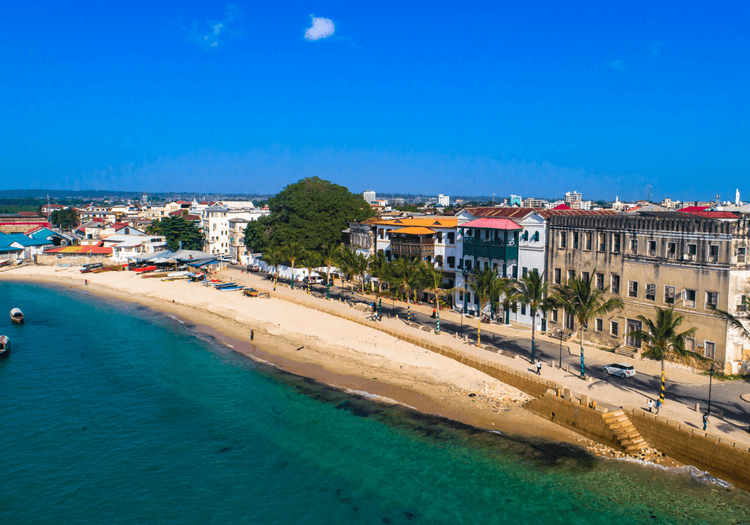
This blog post is an insider guide for travelling to Morocco. You get essential Morocco travel tips on timing, cash, dress, and navigating Marrakech's medinas with confidence. Take a read!