
The West Africa Tour Route: How to Travel Through Ghana, Togo, and Benin in One Trip
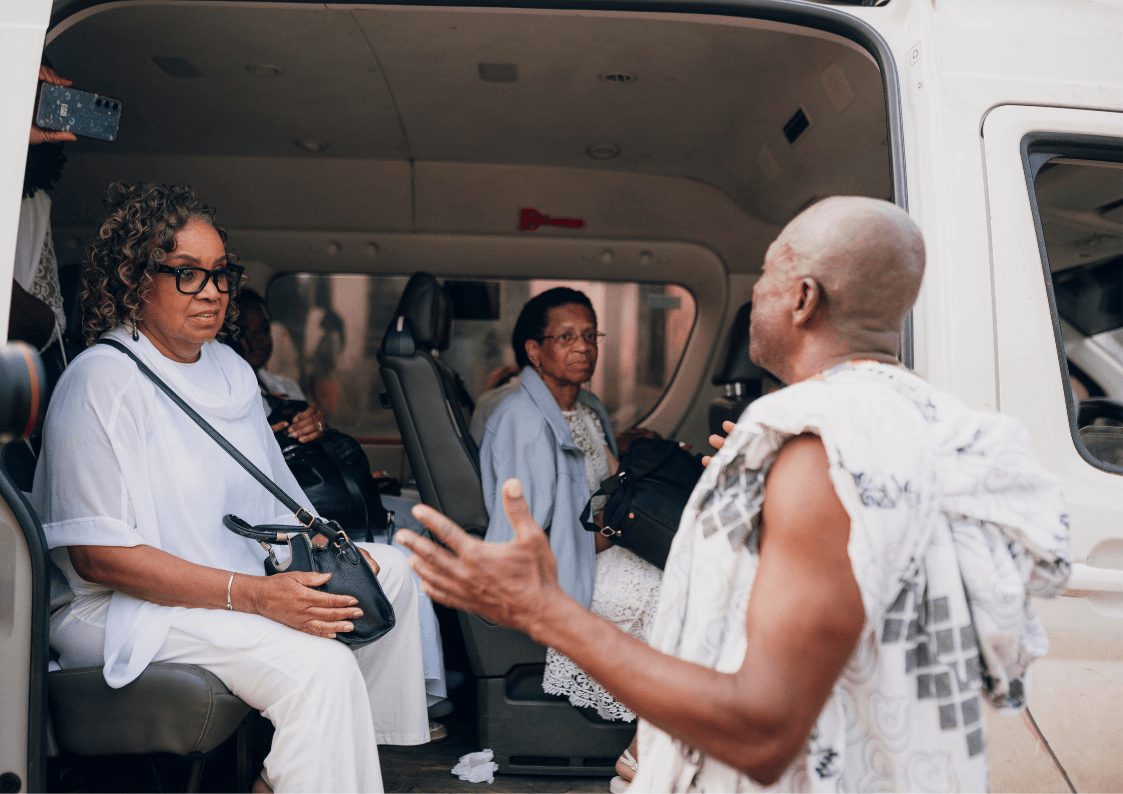
The most revealing thing about the West African coast is how connected it is, and how much borders obscure that.
Step across the Ghana-Togo border at Aflao and the language shifts from English to French. The currency in your pocket changes from Ghanaian Cedis to West African CFA Francs. But the red earth underfoot stays the same. The quality of welcome at a market stall is indistinguishable.
Designing an overland journey through Ghana, Togo, and Benin, rather than flying between capital cities, is the clearest way to experience this. You watch the transitions happen in real time. You understand the region as a continuous human story, not as three separate tourist products.
This guide is a practical resource for planning that journey. As a Ghanaian local guide, I will walk you through the full route, address the logistics that genuinely require preparation, and give you the cultural and operational knowledge to travel this corridor with confidence.


Overcoming the Logistical Hurdles
Multi-country overland travel in West Africa requires some honest preparation. These are not seamless open-border transitions. Each crossing involves its own administrative requirements, and the physical border posts, particularly the Aflao crossing between Ghana and Togo, are busy, high-energy environments.
Attempting this route without preparation, or in unregulated shared taxis without local knowledge, creates unnecessary friction and genuine fatigue.
That does not mean the route is inaccessible. It means that arriving informed makes the difference between a stressful crossing and a smooth one. Here is what you need to know before you go:
Host Advice for Managing Money, Language, and Borders
Visas
Ghana and Benin both offer efficient e-visa systems that you can complete entirely online before departure. Togo offers a visa on arrival at the Aflao border, payable in US dollars. Apply for your Ghana and Benin visas at least two weeks before travel. Bring printed copies of all approvals.
Yellow fever vaccination
Your official yellow fever card is not optional; it is checked by health officials at border crossings, and entry can be denied without it. Make sure yours is current before you travel.
Currency
Ghana uses the Ghanaian Cedi. Both Togo and Benin use the West African CFA Franc (XOF), which makes the transition between those two countries seamless. Bring clean, undamaged US dollar bills issued after 2013, as older or damaged notes are routinely refused by exchange bureaux. Change a substantial amount into CFA Francs when you enter Togo, as that currency will carry you through to the end of the journey in Benin.
Cash over cards
Credit cards are accepted in larger hotels in Accra and Cotonou, but the majority of your daily transactions, at markets, roadside spots, border posts, and community sites, will require local cash. Plan accordingly.
Navigating the Ghana-Togo-Benin Route
This overland corridor runs along the Gulf of Guinea coast, moving east from Ghana's capital through Togo and into Benin. Traveling over land rather than by air allows you to witness the landscape transitions, the architecture changes, and the shift in daily rhythms that make this region coherent as a whole.
Phase One: Ghana- Accra and the Volta Region
Begin in Accra. Ghana's capital is a useful anchor for the journey; it is logistically well-connected, culturally rich, and a good place to calibrate your pace before the cross-border sections begin. Spend a few days in the city's neighborhoods: the historic streets of Jamestown, the design studios and independent restaurants in Osu, and the fabric markets. Accra has a young, forward-moving creative energy that is worth engaging with on its own terms rather than rushing through.
From Accra, travel east into the Volta Region. This part of the journey is where the pace changes decisively. The coastal town of Keta sits on a narrow sand spit between the Atlantic Ocean and the Keta Lagoon, a place of unusual stillness and beauty.
The beaches here are largely empty. Watching local fishermen work their nets by hand at sunset, with the lagoon on one side and the open sea on the other, is a genuinely unhurried experience. Give Keta time. It is not a stopover; it is one of the best places to visit in West Africa, precisely because it asks you to slow down.
Phase Two: Togo -Lomé and the Kpalimé Mountains
Crossing into Lomé brings a distinct shift in texture. The capital of Togo carries the character of a Francophone coastal city. It has wide boulevards, beachfront cafes, modernist architecture from the independence era, and a market culture that is deeply its own.
The Grand Marché in central Lomé is where you will encounter the legacy of the Nana Benz. These are the market women who controlled the West African wax print fabric trade for generations, building substantial wealth and significant regional influence through commerce, without formal institutional support. Their story is one of the most important economic histories in the region, and the market they built reflects it. Spend a morning here. Talk to the vendors. The textiles are worth buying, but the context of who has been selling them is worth understanding.
From Lomé, travel inland to Kpalimé. The shift from the coast to the mountains is dramatic. The air cools. Cocoa and coffee plantations line the roads. Waterfalls cut through forested hillsides. Active craft villages produce woodwork and pottery made by artisans who learned their trade from parents and grandparents. A day in Kpalimé offers a completely different register of Togolese life, slower, greener, and grounded in agricultural and craft traditions.
Phase Three: Benin- Ouidah and Ganvié
Check out this Benin Trip travel guide
Crossing into Benin at Hillacondji brings the final phase of the journey and arguably its most historically significant chapter.
Ouidah deserves a dedicated, unhurried day. Walk the Route des Esclaves from the town center down to the beach and the Door of No Return memorial. Visit the Sacred Forest of Kpassé. Spend time at the Temple of Pythons. Ouidah is not a destination you can move through efficiently. The reason is the weight of its history and the depth of its living Vodun traditions require that you arrive with time and genuine attention. (For a full account of what to expect in Ouidah, see our dedicated guide.)
Ganvié is where the journey ends, and it is a remarkable conclusion. Located on Lake Nokoué north of Cotonou, Ganvié is a city of over 30,000 people built entirely on wooden stilts above the water. It was established by the Tofinu people centuries ago as a strategic refuge; slave raiders operated under a religious prohibition against entering water, so the lake became a sanctuary.
The ingenuity of that solution, and the full functioning community that exists there today, with water markets, schools, homes, and fishing culture, is one of the most striking things in West Africa. Navigate the waterways by traditional wooden canoe. Watch daily life move around you. This is not a heritage museum. It is a living city that survived by being smarter than the forces trying to destroy it.
Bonus Tip for Moving Through This Route
Overland travel distributes your time and money across communities in a way that air travel cannot. When you hire a canoe operator in Ganvié, buy wax print fabric from a Nana Benz in Lomé, employ a local community historian in Keta, or eat at a neighborhood spot in Ouidah, the economic value of your presence goes directly to the people who created and sustain these places.
This is not charity. It is the natural function of travel done at a human pace. The communities along this route are not just attractions; they are partners in an exchange that is only meaningful when it moves in both directions.
Conclusion
Travelers who complete this corridor often describe a reorientation in how they understand West Africa. Not as a collection of countries with separate identities to be checked off a list, but as a region with a shared and continuous human story. It includes extraordinary creativity, profound historical weight, remarkable resilience, and a present-day cultural vitality that does not need outside validation to be significant.
That shift in perspective is the real outcome of this journey.
If you want to travel this route with a small, intentional group, with logistics handled, border crossings managed, and local guides who bring genuine expertise and community relationships to every stop, get in touch for our upcoming West Africa overland journeys.
The road is ready when you are.

Download my free travel guide to navigating Accra- Ghana from hotels to stay at, restaurants to try out, how to stay safe when visiting and nightlife recommendations for my fellow night owls who would love to go dancing.

Hello, fellow adventurers! I'm Rashida, your not-so-typical travel guide. Join me for laughs, mishaps, and perhaps a questionable decision or two (because let's face it, those always make for the best stories). Learn More



Planning a Ghana naming ceremony as a traveler or tourist? This blog post highlights everything you need to know to take part in naming ceremony in Ghana. Take a read!