
A Traveler’s Guide: How to Get Custom Traditional Clothing Made in Accra, Ghana
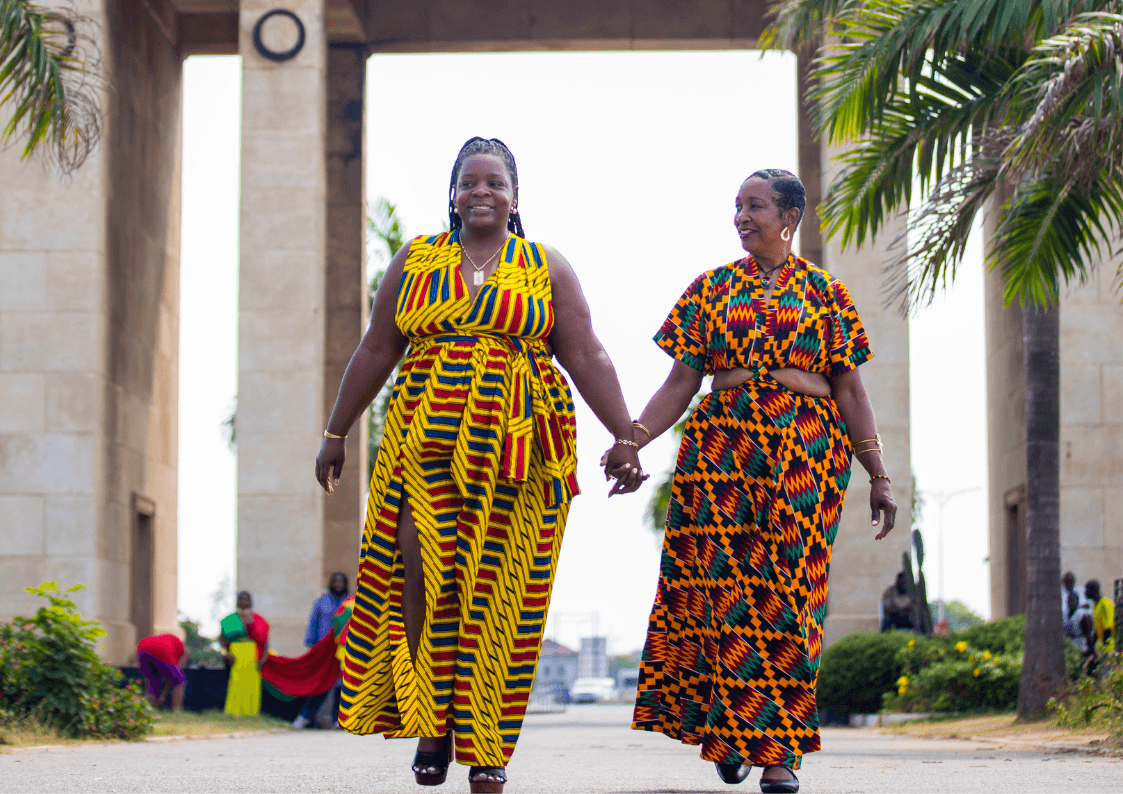
There is a difference between buying clothes and commissioning them. When a garment is cut specifically for your body, not a size estimate, not a generic pattern, but your actual measurements, your fabric choice, your design direction, you carry it differently. You move in it differently.
Many travelers who visit Accra, Ghana, describe the experience of picking up their finished custom piece as one of the clearest memories of their entire Ghana trip. Not the fitting alone, but the whole process: standing in a market choosing fabric, explaining what they want, returning for the adjustment, and finally putting it on.
This guide is for anyone who wants to experience that process well, with enough preparation to feel confident, and enough understanding of the cultural context to engage with it respectfully. We will walk through how to identify and source the right textiles, how to find and communicate with local tailors, what to expect during fittings, and how to care for your garments once you are home.


Understanding Ghana Traditional Clothing: What You Are Working With
Let’s get you the fabric.
Before you source fabric or book a tailor, it helps to understand what you are looking at.
Ghana's textile traditions are not decorative. They carry specific histories, regional identities, and in some cases, ceremonial weight. Knowing the difference shapes what you choose and why.
Let’s have a look at some of the most common Ghanaian textiles.
Handwoven Kente
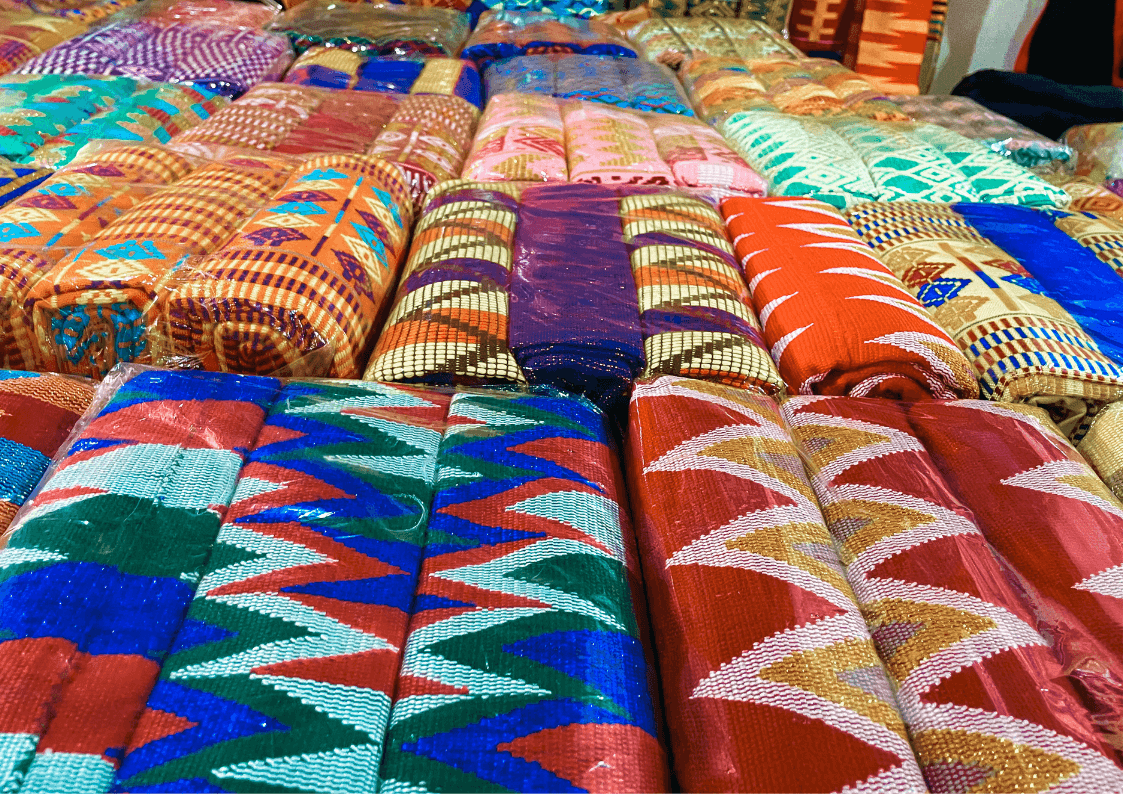
Kente is hand-loomed in long, narrow strips by master weavers. Historically, Kente is made in weaving villages like Bonwire in the Ashanti Region and Agotime-Kpetoe in the Volta Region.
The strips are then stitched together lengthwise to form a full cloth. What you end up with is substantial: a heavy, richly textured garment woven from silk, rayon, and cotton threads in geometric patterns. Where every color and design carries a specific meaning. Gold represents wealth and royalty. Green represents growth and renewal. Black represents maturity and spiritual strength.
Because of its cultural significance, Kente is traditionally reserved for milestone occasions like weddings, graduations, naming ceremonies, and major family gatherings. If you want to commission something in Kente, go in informed about what you are wearing and why. That context makes the garment more meaningful, not less.
Northern Smock
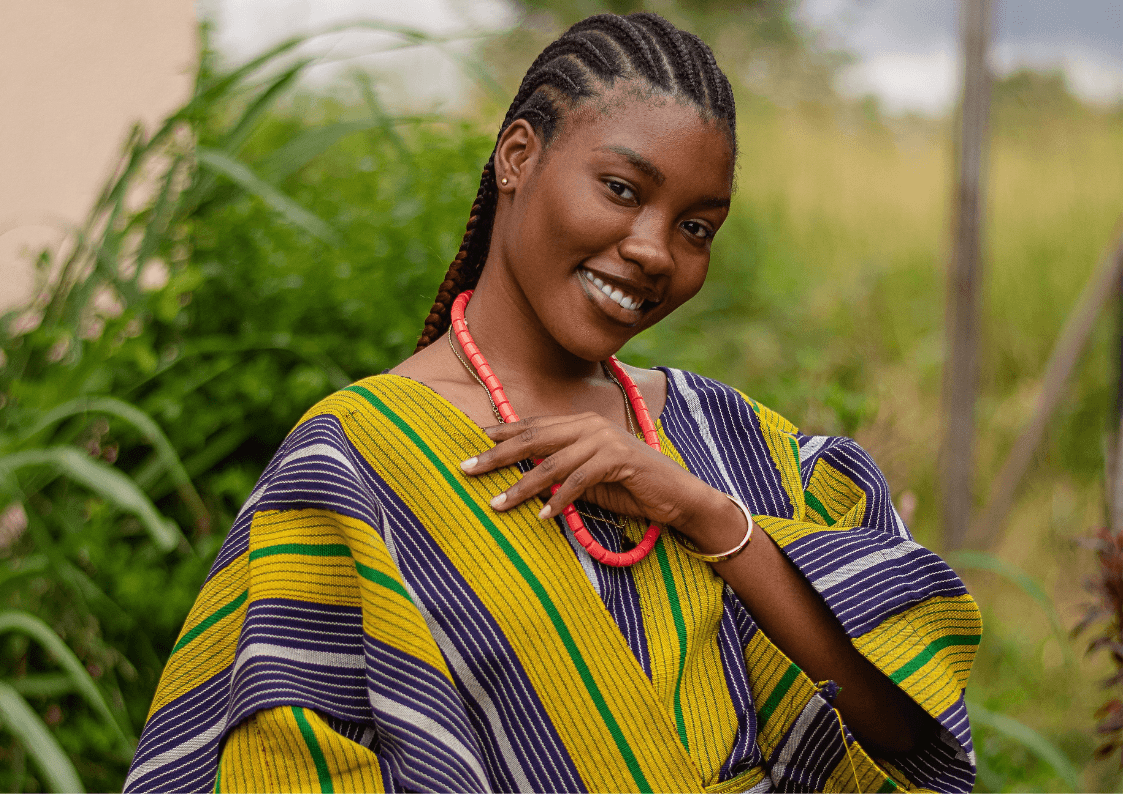
Woven primarily by artisans in the northern regions of Tamale and Bolgatanga, the smock is made from heavy, locally grown cotton dyed with natural indigo and plant extracts. The result is a loose, structured tunic with distinctive vertical stripes and intricate embroidery around the neckline to make ‘fugu or batakari’. It is grounded, visually striking, and deeply rooted in the stories of northern Ghanaian communities. It works beautifully for both casual and more formal settings, and it is one of the most comfortable pieces you will wear in a warm climate.
African Wax Prints (known locally as Ankara)
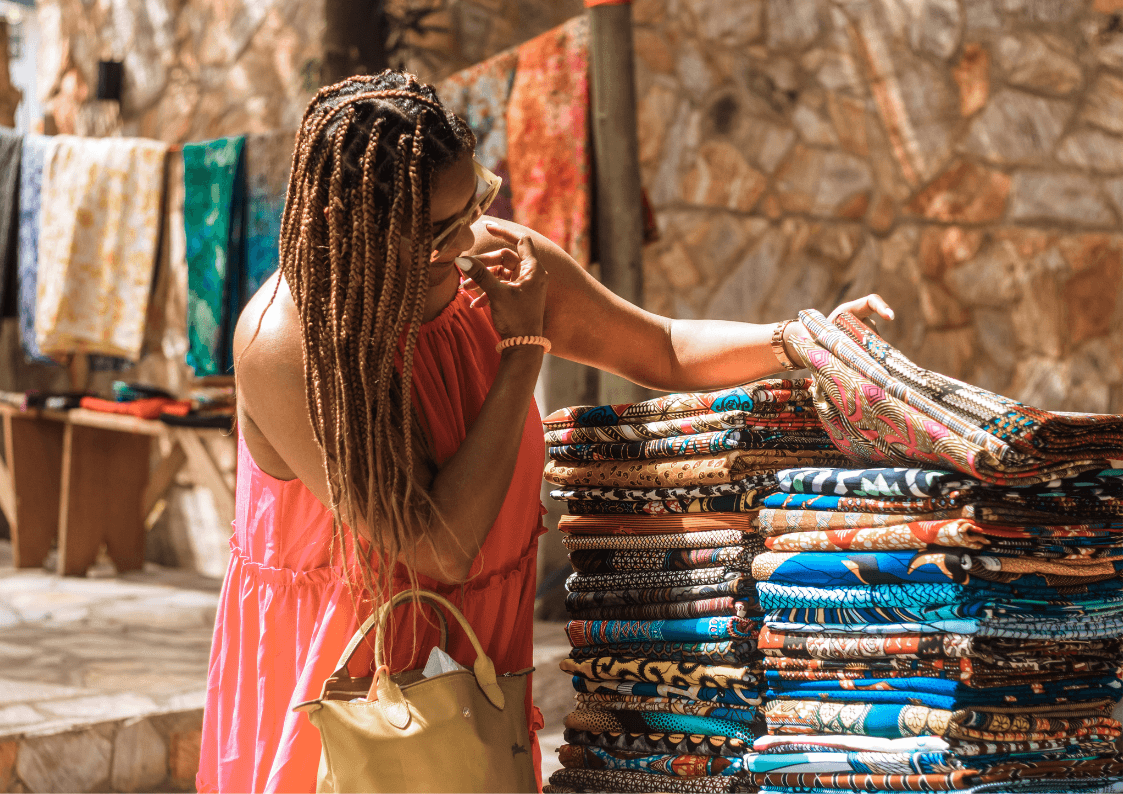
For everyday tailored pieces like shirts, dresses, trousers, blazers, high-quality African wax print fabric is your most practical and versatile option. When you walk through any of Accra's fabric markets, you will see hundreds of patterns stacked in stalls.
The quality varies significantly. To ensure you are buying fabric that holds its color and structure after washing, look specifically for locally manufactured brands like GTP (Ghana Textile Printing) or Woodin. You can confirm the source by checking the fabric's edge for the manufacturer's stamp. For a standard shirt or dress, budget for roughly four to six yards.
Whenever you are not sure of the quality or what will work best for you, your local guide will be your best bet.
Finding the Right Tailor for What You Want to Create
Let’s find you a tailor.
Accra has a wide range of tailoring options, and choosing the right one depends on what you are trying to make.
Neighborhood tailors
Neighborhood tailors operate out of small shops, home workshops, and colorful roadside containers across residential and commercial districts throughout the city. They are skilled in classic Ghanaian silhouettes like shift dresses, long skirts, traditional short-sleeve shirts.
If your vision is relatively straightforward and rooted in traditional styling, a neighborhood tailor is often the best choice. They are experienced, accessible, and they bring a level of craft knowledge that comes from years of working specifically with these fabrics.
The most important thing to know when working with a neighborhood tailor is how to communicate your vision clearly. Sketches are rarely used. The most effective approach is to bring a printed reference image of exactly what you want, or even better, bring a garment from your own wardrobe that fits you well. A physical clothing item gives the tailor a pattern template to work from directly, which removes most of the ambiguity from the process.
Contemporary Fashion Designers
Contemporary designers and fashion houses in neighborhoods like Osu, East Legon, and Labone operate differently. These are professional ateliers where designers work with more complex construction. They work with asymmetrical cuts, structured linings, formal evening wear, and garments that blend traditional fabrics with modern Western silhouettes.
If that is your vision, book a consultation in advance. These designers are experienced in working with diverse body types and international guests, and they maintain higher quality controls. Their prices reflect that level of craft and consultation.
What to Know Before and During Your Fittings
Before the Fitting
Plan your time before you plan your design. Quality tailoring takes time, typically seven to ten business days from first measurement to final fitting, sometimes longer for complex pieces. That timeline accounts for fabric preparation, initial cutting, basting, and at least one round of adjustments. Some tailors can work faster with increased rates, but you shouldn’t leave this to chance..
The single most common mistake travelers make is waiting until the last few days of their trip to drop off fabric. This puts unnecessary pressure on the tailor, reduces the time available for corrections, and creates anxiety on your end before your flight home. Fabric sourcing and your first tailor appointment should happen within the first two days of arriving.
During the Fitting
Wear the right undergarments to your fitting. This sounds like a small detail, but it genuinely changes the outcome. Wear the exact undergarments, bra, or shapewear to your fitting that you plan to wear with the finished piece. A change in silhouette between your measurement appointment and your final fitting can shift the drape and fit of the fabric in ways that are difficult to correct at a late stage.
Move during your fitting, do not just stand still. Traditional cotton wax prints and handwoven Kente do not have elastic stretch. A garment can look right in the mirror and feel immediately restrictive the moment you sit down or lift your arms. During your fitting, walk across the room, sit in a chair, raise your arms, and move naturally. If anything pulls or pinches, say so immediately. Every tailor expects and welcomes this feedback. That is what the fitting is for.
Approach the relationship as a relationship. In Accra, commerce is relational. Your interaction with a tailor is not a transaction you complete and leave behind. Take time to learn their name, ask questions about their work, and listen when they explain their process. Tailors who feel respected and genuinely engaged invest a different level of care and attention into the garment they are making for you. That is not a strategy; it is just how respectful exchange works.
Where to Get Ready-to-Wear Ghanaian Clothing
Not every traveler has the time for the tailoring process, and that is completely fine. Accra's fashion scene has grown remarkably over the past decade, and there are now several excellent options for finding beautifully made, culturally rooted Ghanaian clothing that is ready to wear the moment you walk out the door.
Whether you are looking for a kente-inspired statement piece for a funeral, a bold Ankara dress for a naming ceremony, or a beautifully crafted smock to take home as a meaningful souvenir, these Accra-based brands and stores are worth your time:
Christie Brown
Ghana's most celebrated luxury womenswear label, founded by designer Aisha Obuobi Ayensu. Christie Brown creates ready-to-wear and bespoke pieces that weave traditional Ghanaian textiles into contemporary silhouettes. Their boutique is based in Osu, and their pieces range from statement occasion wear to elegant everyday designs. This is where you go when you want something that will still feel significant years from now.
KIKI Clothing
A modern ready-to-wear brand that blends contemporary silhouettes with African print fabrics. KIKI gained international recognition when actress Lupita Nyong'o wore one of their dresses on the cover of Vogue US. Their designs are elegant without being overly formal — ideal if you want something wearable beyond your trip.
The LOTTE
A curated concept store in Cantonments that brings together fashion, accessories, beauty, and homeware from across the African continent under one roof. If you want to browse several Ghanaian and African designers without navigating multiple boutiques, The LOTTE is the place.
Global Mamas
A fair-trade cooperative based in Osu that supports Ghanaian women artisans. Known for their beautiful batik wrap dresses, skirts, and children's clothing in earthy, hand-crafted tones. Every purchase supports the women who made it directly. Their prices are thoughtfully fair, and the quality is lovely.
Note: boutique prices in Accra are higher than market prices, but they reflect fair wages, skilled design work, and quality materials. If you want something truly special, a piece that carries the weight of craft and intention, Christie Brown and the Lotte are worth the investment.
How to Care for your Garments When you Return Home
Cotton wax prints should be washed in cool water with a mild detergent. Avoid high-heat drying, which can shrink natural cotton fibers and dull the print glaze. Air-dry indoors, away from direct sunlight. When ironing, turn the garment inside out and use a medium heat setting.
Handwoven Kente and Smock should not go into a domestic washing machine. Spot-clean small marks with cold water and gentle soap, or bring the piece to a dry cleaner who has experience with heavyweight artisan textiles. Store Kente folded in a breathable cotton garment bag. Hanging it on wire hangers over time can distort the shoulder structure of the cloth.
Conclusion
Not having your custom Ghana traditional clothing ready before your departure date, or not having it fit perfectly, can easily subtract from your memorable Ghana tour experience. Following the guidelines in this blog post will help you avoid such unpleasant situations.
Getting custom-made traditional clothing during your Ghana trip is not just about the garment, though the garment is worth the effort. It is also about the knowledge you carry home with you. You understand what you are wearing, who made it, what the patterns mean, and how to care for it.
You become someone who engages with Ghanaian craft tradition, rather than someone who just purchases a souvenir of it.
If you want to go through this process with support, someone who knows the vendors, has existing relationships with vetted tailors, and can walk you through the full experience from fabric market to final fitting, our curated Ghana journeys include exactly that.
We connect tribe members directly with trusted textile vendors and designers we have worked with for years, and we stay with you through the process. If that sounds like the kind of Ghana trip you want, explore our upcoming Ghana group journeys here.
Your place in the tribe is waiting.

Download my free travel guide to navigating Accra- Ghana from hotels to stay at, restaurants to try out, how to stay safe when visiting and nightlife recommendations for my fellow night owls who would love to go dancing.

Hello, fellow adventurers! I'm Rashida, your not-so-typical travel guide. Join me for laughs, mishaps, and perhaps a questionable decision or two (because let's face it, those always make for the best stories). Learn More




Looking for things to do in Zanzibar beyond lying on the beach? From Stone Town's history to spice farm tours, this blog post delves into what the island actually offers.