
20 Important Facts About East Africa Every Traveler should Know
Quick question: when you picture East Africa, what comes to mind first? Is it the wildebeest migration thundering across the plains, snow sitting on top of Kilimanjaro near the equator, or a market stall in Zanzibar stacked with cloves and cinnamon?
Well, chances are it's some mix of all three, and honestly, that's exactly the point. East Africa packs an almost unreasonable amount of variety into one region, and a little context before you book your tour makes the whole trip land differently.
So let's have some fun with this. Here are 20 facts about East Africa every traveler should know. Some practical, some just plain fascinating, and a look at what they actually mean for planning your East Africa tours.
Let’s get right to it.
-
The Serengeti and the Maasai Mara Are Actually One Connected Ecosystem
Zanzibar Earned Its "Spice Islands" Reputation for Good Reason
East Africa Is Home to Hundreds of Distinct Ethnic Groups and Cultures
You Can Literally Stand on the Equator in Both Kenya and Uganda
East Africa Is Considered the Historical Birthplace of Coffee
Uganda Requires a Yellow Fever Vaccination Certificate for Entry
East Africa Is One of the Few Regions Where You Can Combine Safari, Mountains, and Beach


Facts About East Africa
1. "East Africa" usually means four core countries but the region is bigger than that.
When people talk about East Africa tours, they're most often referring to Kenya, Tanzania, Uganda, and Rwanda, the heartland of the classic safari and gorilla-trekking circuit. The wider East African region also includes Ethiopia, Burundi, South Sudan, and Somalia, each with its own distinct travel appeal. However, the four core countries remain where most first tours are built around.
Knowing this distinction matters when you're searching for tours online. A package labelled "East Africa" could mean a focused two-country safari or a much broader regional itinerary. So it's worth confirming exactly which countries are included before comparing prices.
2. It's home to the Great Rift Valley.
The Great Rift Valley is one of the planet's most dramatic geological features.
Stretching thousands of kilometres from the Middle East down through East Africa, the Great Rift Valley carved out the dramatic escarpments, volcanic peaks, and soda lakes that define much of the region's scenery. You'll cross parts of it on nearly any Kenya or Tanzania itinerary, often without realising quite how significant the landscape around you actually is.
3. Kilimanjaro is Africa's tallest mountain, and you don't need technical climbing skills to summit it.
Rising to 5,895 metres in Tanzania, Kilimanjaro is the highest freestanding mountain in the world and one of the most achievable major peaks for non-technical trekkers, provided you build in proper acclimatisation days. It's a multi-day trek, not a single climbing day, so any tour including it should show a realistic itinerary length.
Speaking of things worth planning your trip around, here's the wildlife spectacle East Africa is most famous for.
4. The Great Migration is a genuine year-round event, not a single moment.
Over two million wildebeest, zebra, and gazelle move in a continuous loop between Tanzania's Serengeti and Kenya's Maasai Mara, following the rains. The dramatic river crossings most travelers picture typically happen from July to October. But the migration itself is happening somewhere in the ecosystem nearly every month of the year.
Calving season alone, in the southern Serengeti around January and February, is its own remarkable sight, with hundreds of thousands of wildebeest calves born within a few short weeks.
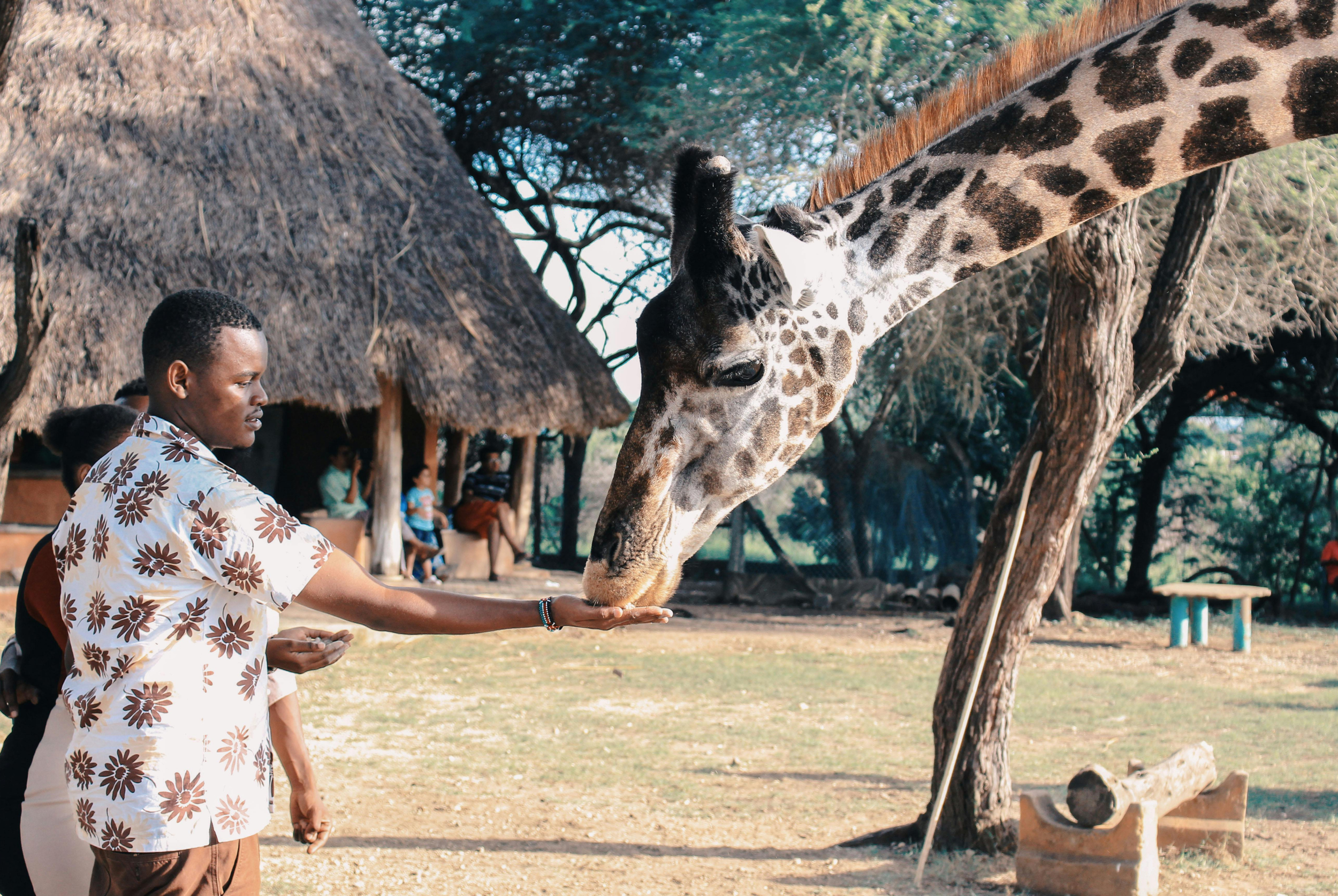
5. The Serengeti and the Maasai Mara are actually one connected ecosystem.
Despite sitting in two different countries, the Serengeti (Tanzania) and Maasai Mara (Kenya) share the same wildlife-rich plains, split only by an international border the animals themselves don't recognise. This is exactly why many East Africa tours combine both parks rather than treating them as separate destinations.
If wide-open plains aren't quite your scene, East Africa has a completely different kind of wildlife encounter waiting in its forests.
6. Mountain gorillas live in just three countries on Earth, and two of them are in East Africa.
Roughly half the world's remaining mountain gorillas live in Uganda's Bwindi Impenetrable Forest and Rwanda's Volcanoes National Park, with the rest across the border in the Democratic Republic of Congo. Gorilla trekking permits are limited and sell out well in advance, so this is one experience worth booking far ahead of your trip. Rwanda's permits run at a notably higher price point than Uganda's, which is a genuine factor worth weighing when you're comparing gorilla-inclusive tours between the two countries.
7. Lake Victoria is Africa's largest lake by surface area.
Shared by Kenya, Uganda, and Tanzania, Lake Victoria is the second-largest freshwater lake in the world and a genuine regional lifeline. It is known for fishing, transport, and, increasingly, lakeside tourism that pairs well with a safari-focused itinerary.
8. Jinja, Uganda is widely credited as the source of the Nile.
The world's longest river begins its journey right here, where Lake Victoria's waters spill northward. It's become a genuine adventure hub in its own right, with whitewater rafting and bungee jumping drawing travelers who want more than wildlife on their Uganda leg.
From whitewater rapids, let's swap gears completely and head somewhere far more fragrant.
9. Zanzibar earned its "Spice Islands" reputation for good reason.
This Tanzanian archipelago has been a global center for clove, nutmeg, cinnamon, and black pepper production for centuries, and for spice farm tours. It remains one of its most popular cultural experiences, alongside, of course, some of the most striking beaches on the East African coast.
Stone Town, Zanzibar's historic center, adds a layered Swahili, Arab, and colonial-era architectural history that's easy to spend a full day wandering.
10. Swahili is the region's great connector language.
Spoken widely across Kenya, Tanzania, Uganda, and beyond, Swahili (Kiswahili) is the lingua franca that lets travelers move between countries and communities with a shared handful of phrases. Learning basics like jambo (hello) and asante (thank you) genuinely opens doors during your trip.
That same spirit of connection runs through the region's people too. There’s far more diversity here than a single postcard image could ever capture.
11. East Africa is home to hundreds of distinct ethnic groups and cultures.
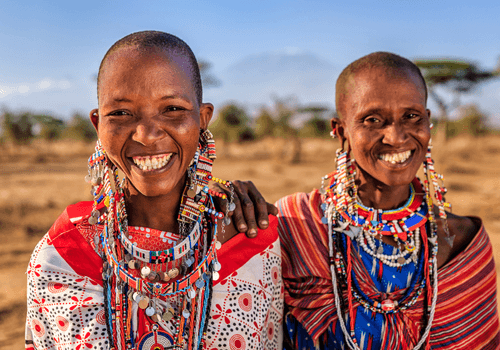
The Maasai are the community most travelers hear about first, largely thanks to their visibility near major safari parks. But East Africa is home to hundreds of communities like the Kikuyu, Luo, Chagga, Baganda, and many others, each with their own language, customs, and history. A good tour introduces you to this diversity rather than treating one community as representative of the whole region, and cultural visits that are arranged with genuine community involvement.
12. Rwanda is known as the "Land of a Thousand Hills," and it's remarkably clean.
Rwanda's rolling, terraced landscape gives the country its nickname, and it's also known for Umuganda, a nationwide community clean-up held on the last Saturday of most months. This contributes to Rwanda's reputation as one of the cleanest countries on the continent.
13. You can literally stand on the equator in both Kenya and Uganda.
Marked equator crossing points exist along major highways in both countries, often with small demonstration stalls showing water draining differently on each side of the line. It's a quick, fun stop that regularly gets built into road-based safari itineraries.
While you're straddling hemispheres, here's a fact that might explain why your morning routine already has an East African connection.
14. East Africa is considered the historical birthplace of coffee.
Ethiopia's Kaffa region is widely credited as coffee's original home, and coffee culture remains deeply woven into daily life across the region.
15. The "Big Five" are all found across East Africa's parks.
Lion, leopard, elephant, buffalo, and rhino, known as the classic Big Five, can all be spotted across parks in Kenya, Tanzania, Uganda, and Rwanda. However, rhino sightings are rarer and concentrated in specific conservancies given historically low population numbers.
If seeing all five is a genuine priority, ask your operator directly which specific parks on your itinerary give you a realistic shot at rhino, rather than assuming any safari park guarantees the full set.
Okay, let's get practical for a minute because a few of these facts will genuinely change how you plan your paperwork.
16. A Single Visa can Cover Three East African countries.
The East Africa Tourist Visa (EATV) allows travel across Kenya, Uganda, and Rwanda on one $100, 90-day, multiple-entry visa. This is a genuinely useful option if your tour crosses between these three countries. Tanzania is not included and always requires its own separate visa, a detail that catches travelers out more than almost any other.
17. Uganda requires a Yellow Fever vaccination certificate for entry.
This applies to all travelers over one year old, regardless of where you're arriving from, and it's checked on arrival. So this is one health requirement worth sorting out weeks before your trip, not the night before you fly.
18. Currency Varies by Country, and it's Rarely Interchangeable.
Kenya uses the Kenyan shilling, Tanzania the Tanzanian shilling, Uganda the Ugandan shilling, and Rwanda the Rwandan franc. These are four different currencies across a region that can feel, geographically, like one continuous trip. US dollars are widely accepted for park fees and larger payments, but small local purchases generally need local currency.
Money sorted, now let's talk timing, because when you go changes what you'll actually see.
19. The dry seasons offer the best wildlife viewing but "best" depends on what you want to see.
June to October and January to February are generally considered peak safari months, with thinner vegetation making animals easier to spot and, in the case of July to October, river crossings more likely. The green season (roughly March to May) brings lower prices and lush scenery, trading some wildlife visibility for a quieter, more affordable trip.
And to close it out, here's the fact that ties everything above together.
20. East Africa is one of the few regions where you can combine safari, mountains, and beach in a single trip.
A tour built across Kenya and Tanzania alone can move from Rift Valley game drives to Kilimanjaro's slopes to Zanzibar's beaches without ever leaving the region. There is a range of landscapes that few destinations on Earth can offer within a single, well-planned itinerary.
It's worth building in genuine transition time between these legs, though; jumping straight from a dawn game drive to a beach flight in the same day tends to leave travelers more exhausted than relaxed.
What This Means for Planning Your East Africa Tours
Facts are fun to collect, but a good travel guide should also change how you actually book. Here's where these details translate directly into itinerary decisions:
If your itinerary crosses Kenya, Uganda, and Rwanda, ask whether the EATV applies it can genuinely simplify your border crossings and save on visa costs compared to applying separately. Remember it doesn't extend to Tanzania, so double-check your full route before assuming one visa covers everything.
If Uganda is on your route, confirm your yellow fever certificate is sorted well in advance, since this isn't something you can arrange at the airport, and being turned away at immigration is a genuinely avoidable way to start a trip.
If gorilla trekking is a priority, book significantly ahead of your trip. Sometimes six months to a year for peak season, since permits are limited and tours are often built around permit availability rather than the other way around.
If you want the river-crossing spectacle of the migration specifically, target July through October and confirm your tour operator's itinerary actually places you in the right park at the right time. "The migration season" is used loosely by some operators, regardless of actual timing.
If you want to combine parks across a border, look for tours explicitly built around the Serengeti–Maasai Mara ecosystem rather than treating Kenya and Tanzania as entirely separate trips.
If you're combining safari with the coast, build in at least one buffer day between legs rather than a same-day transfer, so the change of pace actually feels restful instead of rushed.
If currency logistics feel like a lot to track across four countries, ask your tour operator which costs are typically prepaid in USD (park fees, guides, accommodation) versus what you'll want in small local currency for day-to-day (markets, tips, casual purchases). This simplifies packing the right mix of cash before you go.
Frequently asked questions
Is East Africa safe for tourists?
Yes, the core tourist circuits across Kenya, Tanzania, Uganda, and Rwanda are well-established and welcome large numbers of international visitors each year, particularly through reputable tour operators with experienced local guides.
How many days do I need for an East Africa tour?
A focused single-country safari can work well in 5–7 days, while a multi-country trip combining Kenya, Tanzania, and either Uganda or Rwanda typically needs 10–14 days to avoid feeling rushed between destinations.
Do I need separate visas for each East African country?
It depends on your route. Kenya, Uganda, and Rwanda can be covered under the single East Africa Tourist Visa, but Tanzania always requires its own separate visa regardless of which other countries you're visiting.
Can I see the Big Five and mountain gorillas on the same trip?
Yes, though it usually means combining a savanna-based safari country (Kenya or Tanzania) with Uganda or Rwanda for gorilla trekking.
Conclusion
East Africa isn't a single destination so much as a cluster of distinct, connected experiences. You witness a migration that doesn't stop for borders, gorillas found almost nowhere else on Earth, a coastline shaped by centuries of spice trade, and mountains rising straight out of the savannah.
Knowing these facts before you book doesn't just make for good trivia. It shapes which countries you combine, when you travel, and what you'll actually need sorted before you land. Most travelers who arrive genuinely curious about the place, rather than just its wildlife checklist, tend to be the ones who come home with the stories worth telling.
Ready to plan your East Africa trip?
We help travelers build East Africa tours around what actually matters to them. Tell us what you're hoping to see, and we'll help you build the right route.
Start planning your East Africa tour with Sheeda Travel Tribe

Download my free travel guide to navigating Accra- Ghana from hotels to stay at, restaurants to try out, how to stay safe when visiting and nightlife recommendations for my fellow night owls who would love to go dancing.

Hello, fellow adventurers! I'm Rashida, your not-so-typical travel guide. Join me for laughs, mishaps, and perhaps a questionable decision or two (because let's face it, those always make for the best stories). Learn More


Looking for things to do in Zanzibar beyond lying on the beach? From Stone Town's history to spice farm tours, this blog post delves into what the island actually offers.